Main Sewer Line Cleaning
Clear a clogged main sewer line fast, from the house trap to the city main, with cable machines, jetting and camera proof.
Main Sewer Line Cleaning details
Street tree roots are one of the top causes of sewer clogs in Philadelphia. We cut them out, flush the line and show you on camera where the roots are getting in.
Quick answer: We remove tree roots from a sewer line by cutting them with a sectional cable machine fitted with a root saw sized to the pipe, then flushing the cut roots out to the main. When the line needs a thorough cleaning, we follow with hydro jetting to strip the remaining root hairs. Finally, we camera the line to show you where the roots are entering and whether the pipe is damaged.
Tree root removal from a sewer line means cutting out the roots that have grown inside the pipe, flushing out the pieces, and restoring full flow. Roots enter sewer lines through small gaps at pipe joints and cracks, drawn by the water, nutrients and warmth inside. Once inside, they grow into a mat of fine hairs that catches toilet paper and waste. Over months the mat thickens into a solid plug, and your main line stops draining. Left alone, roots can widen joints, crack pipe and eventually break a line.
Fullerton Plumbing and Drain Cleaning removes sewer roots with a sectional cable machine fitted with root saw blades sized to the pipe, followed by hydro jetting when the line needs a full cleaning of the remaining root hairs. Then we run a sewer camera so you can see the cleaned pipe and the joints where roots are entering. That last step matters, because root removal clears the line but does not seal the joints. Knowing how many entry points you have and how bad they are tells you whether a maintenance schedule or a repair makes more sense.
We handle tree root removal for sewer lines at rowhomes, twins, singles and commercial buildings across Philadelphia and Bucks, Montgomery, Delaware and Chester counties. Roots often cause sudden backups, so we are open 24 hours a day, 7 days a week, including nights, weekends and holidays. You get an upfront quote before any work starts, a live camera view of your pipe, and a clean work area when we finish. We will never recommend digging up a line without showing you why on screen.
Early root intrusion looks like thin hairs hanging from a joint. They catch toilet paper and slow the line without fully blocking it. A cable cleaning followed by jetting removes them cleanly, and a camera check shows how many joints are affected. Catching roots at this stage is the cheapest time to deal with them.
Left alone, root hairs grow into a dense mat that fills the pipe. This is what causes a sudden main line backup. We cut through with a root saw head, sometimes in several passes and with different blade sizes, until the line flows. Heavy masses usually call for jetting afterward.
Terra cotta clay is the most root prone pipe in Philadelphia. Every few feet there is a joint, and every joint is a possible entry point. Clay laterals under sidewalks with street trees are the classic case. The camera shows each entry point so you can weigh maintenance against repair.
Old cast iron laterals and building drains get roots through corroded spots, cracks and joints. Root removal also knocks loose scale, so we check the pipe wall closely on camera. Cast iron with heavy roots and thin, corroded walls is often a candidate for repair or replacement.
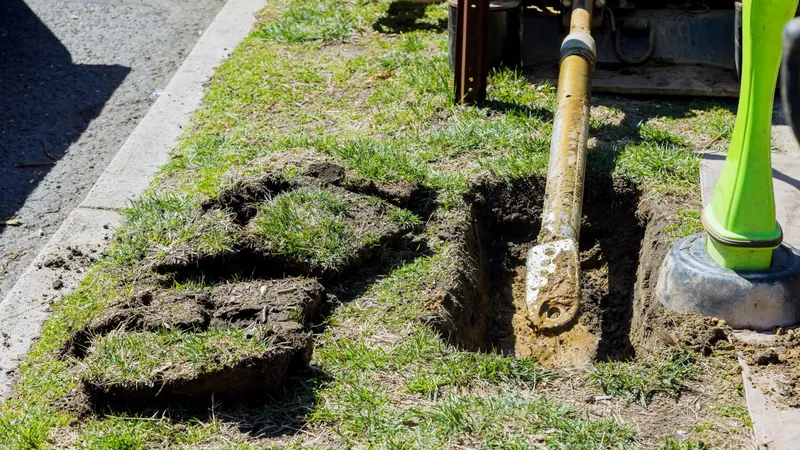
We open the line through the house trap or an exterior cleanout and run a sectional cable machine with a root saw head sized to your pipe. The blades cut through the root mass and restore flow. We work the cable through each root zone until the line drains freely to the city main.
Cable cutting leaves fine root hairs on the joints. When the line needs a full cleaning, we follow with hydro jetting, which strips those hairs and flushes the cut roots and debris down to the main. A cleaner pipe takes longer to grow back and gives the camera a clearer picture.
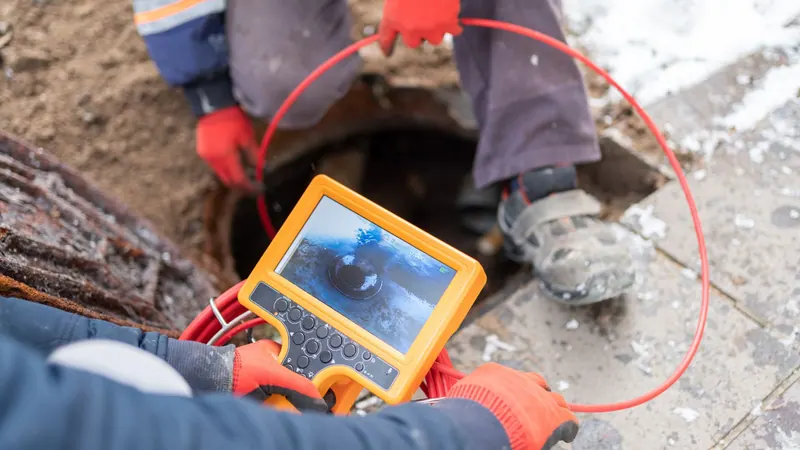
We send a sewer camera through the cleaned line while you watch. You see each joint where roots were entering, any cracks or offsets they caused, and the overall condition of the clay or cast iron. We locate and mark problem spots from above so you know where they sit.
We give you plain options. A few small entry points may only need a maintenance cleaning every year or two. Many entry points, broken pipe or heavy offsets may call for a spot repair, lining or replacement. You get an upfront quote for each option and the time to decide.
Philadelphia's older neighborhoods are full of street trees planted in the strip between the sidewalk and the curb, right on top of the sewer laterals that run from each house to the city main. In South Philly, West Philly, Germantown, Fishtown and Point Breeze, many of those laterals are original terra cotta clay pipe laid in short sections with mortar or packed joints. After decades of freeze and thaw, settling and traffic, those joints open just enough for a root hair to slip in. Once a root reaches water and nutrients inside the pipe, it grows fast. That is why root clogs in Philadelphia often start under the sidewalk, right where the tree pit and the lateral cross.
In Philadelphia the property owner is generally responsible for the lateral out to the city main, so roots in that section are the homeowner's to clear, even when the tree is on the sidewalk. Old cast iron laterals get roots too, at their joints and through corrosion holes. In the suburbs, mature trees on the Main Line in Ardmore, Bryn Mawr and Wayne, and in Delaware County towns like Drexel Hill, Lansdowne and Havertown, send roots into clay and cast iron lines the same way. Roots tend to grow most in spring and summer, which is when many root clogs show up.
The cost of sewer root removal depends on how heavy the root mass is, how many root zones there are, how far out they sit and how easy the cleanout is to reach. A small root plug near the house trap is a smaller job than a lateral packed with roots from the house to the street. Adding hydro jetting, a camera inspection and locating, or working nights and weekends all change the scope. Repair or replacement, if needed, is quoted separately. We give you an upfront quote before any work starts.
Call (518) 776-7838 for an upfront quote. We answer 24/7 and explain the price before any work starts.
No stock photos here. These are our own technicians, our own equipment and real repairs.


We provide tree root removal across Philadelphia and Bucks, Montgomery, Delaware and Chester counties.
We remove tree roots from a sewer line by cutting them with a sectional cable machine fitted with a root saw sized to the pipe, then flushing the cut roots out to the main. When the line needs a thorough cleaning, we follow with hydro jetting to strip the remaining root hairs. Finally, we camera the line to show you where the roots are entering and whether the pipe is damaged.
Yes, roots usually grow back because cutting them clears the pipe but does not seal the joints they came through. How fast they return depends on the tree, the number of entry points and the pipe condition. Many Philadelphia homes with clay laterals get a maintenance cleaning every one to two years. If the camera shows many entry points or broken pipe, a repair or lining is the permanent fix.
In Philadelphia the property owner is generally responsible for the sewer lateral from the house to the city main, including sections under the sidewalk near a street tree. That usually means clearing roots from the lateral is the homeowner's job. If you have questions about a specific street tree or the main itself, the Philadelphia Water Department and the city are the right contacts. We can camera and locate the problem to document it.
Root treatment products can slow regrowth of fine roots, but they will not clear an existing root clog, and they are not a substitute for mechanical cutting. A packed root mass still has to be cut out. Some products can also be harsh on old pipe and fittings. The most reliable approach is to cut and flush the roots, then camera the line and plan maintenance or repair based on what you see.
Yes. Roots enter through small gaps, then grow thicker inside the pipe and at the joint. Over time they can push joints apart, crack the clay, and in severe cases break or collapse a section. Heavy roots also hold the pipe open to more soil and water. A camera inspection after root removal shows whether your clay pipe is just root invaded or actually damaged and needs repair.
Most homes with recurring root problems do well with root removal every 12 to 24 months, timed before the line clogs again. The right interval depends on the tree species, how many entry points the camera shows and how fast roots returned last time. Keep track of when your line clogs. If it is the same season each year, schedule your cleaning a few weeks before that window.
In most cases fixing the sewer line is the better answer. Removing a tree does not remove the roots already in the pipe, and another tree nearby can find the same open joints. Street trees in Philadelphia are also not yours to remove. Sealing the line with a repair, lining or replacement stops roots at the source. A camera inspection tells you which option fits your pipe.
Clear a clogged main sewer line fast, from the house trap to the city main, with cable machines, jetting and camera proof.
Main Sewer Line Cleaning detailsHigh pressure water jetting that scours grease, roots and scale from sewer and drain lines, leaving the pipe walls clean.
Hydro Jetting detailsA live video sewer line inspection that shows roots, cracks, sags and clogs, so you know exactly what is in your pipe.
Sewer Camera Inspection detailsWe answer 24 hours a day, 7 days a week. Call and talk to a real person, or request service online and we will call you back.
Tell us what is happening. Our team usually calls back within two hours. Emergency? Call now, we answer 24/7.
Or call (518) 776-7838, 24 hours a day