
Sewer Backup Service
Stop a sewer backup, clear the line and clean up the plumbing mess, with help preventing storm backups from the combined sewer.
Sewer Backup Service details

Basement floor drains, laundry standpipes and house traps are where Philadelphia drain trouble shows up first. We clear them, find the cause of any backup and stop the sewer smell, 24 hours a day.
Quick answer: We remove the grate, run a cable machine through the floor drain trap and branch line, and clear sediment, lint and debris to the main. If the floor drain is backing up because of a downstream clog, we clear the house trap or main line instead. Then we flush the drain and refill the trap so it seals.
Floor drain cleaning clears the drains set into basement, laundry room and utility room floors, along with the lines and traps they connect to. A floor drain catches water from washing machines, water heaters, condensate and seepage, and in many homes it ties directly into the main sewer line. Because it is the lowest drain in the house, it is often the first place a main line problem shows itself: water or sewage rising out of the grate.
Philadelphia basements have a feature many newer homes do not: the house trap. In older rowhomes and twins, the main drain passes through a U shaped running trap near the front basement wall before heading out under the sidewalk. The trap usually has one or two cleanout plugs on top, and some homes have a fresh air vent connected to it. When the trap clogs, the floor drain backs up. When a trap plug is missing or loose, or the floor drain's own trap dries out, sewer gas drifts into the basement.
We clear floor drains and laundry drains with cable machines sized for the line, open and clean house traps, and use hydro jetting where lint, sludge and grease have built up. When a backup points to the lateral, we run a sewer camera with live view. You get an upfront quote before work starts, and we clean up the basement when we finish.
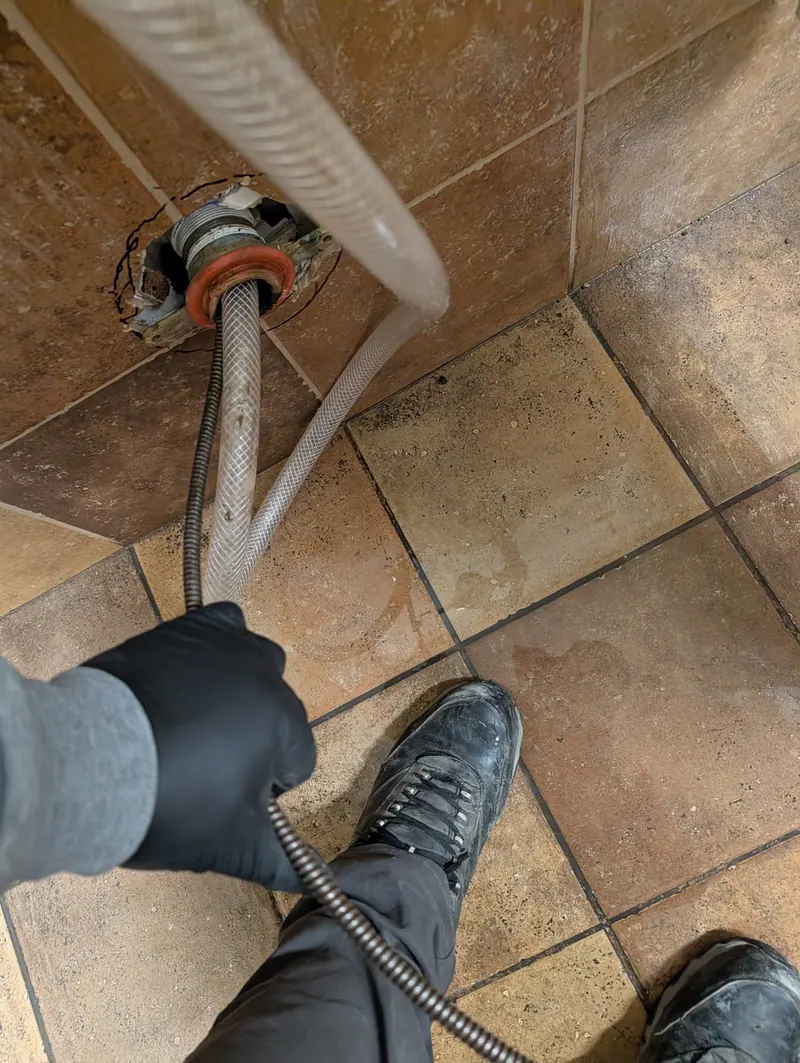
The grate in your basement floor connects through a trap to the main drain. Dirt, sediment and debris settle in it over time, and an unused drain trap dries out and lets in sewer gas. Cleaning clears the branch and refills the trap so it works and seals.
Washing machines pump a lot of water fast, carrying lint, hair and soap. Standpipes and laundry sinks that drain to the floor or main line build up lint until they overflow during the spin cycle. We clear the line and suggest a lint catcher to protect it.
The house trap sits on the main drain near the front wall, often under a small floor access or with two cleanout caps showing. It is a frequent clog point and a common source of basement sewer smell. We clean the trap and check the plugs so it drains and seals.
In combined sewer areas of Philadelphia, heavy rain can push water back toward basement floor drains. A partially clogged lateral makes it worse. We clear the line, use a camera to check the lateral, and can talk with you about a backwater valve.
We look at the floor drain, laundry connection, house trap and any cleanouts, and ask when the water appears: during laundry, after flushing or after rain. That pattern tells us whether the clog is in the floor drain branch, the trap or the main line.
We tell you what we think is happening and how we plan to clear it, and give you an upfront quote. If a camera inspection would help, for example after storm backups, we include it as an option so you can decide.
We open the floor drain or house trap cleanout and run a cable machine through the line, clearing lint, sludge, debris and roots. Heavy buildup may call for hydro jetting. We check the trap cleanout plugs and reseal or replace them when they leak.
We run the washer, nearby fixtures and water into the floor drain to confirm it all flows. We refill the floor drain trap to stop sewer gas, wash down the area around the drain and leave the basement cleaner than we found it.
Philadelphia's older rowhomes and twins were built with basements, and their plumbing was designed around a house trap on the main drain. The trap kept sewer gas from the city sewer out of the house, and the fresh air vent at the front of the house let the system breathe. Over a century later, many of those traps are still there. They work, but they collect wipes, grease and debris that make it past the fixtures, and their cleanout plugs can corrode or go missing. A floor drain backing up in a South Philly, Port Richmond or Frankford basement is very often a house trap problem.
Much of the older city is also served by the combined sewer system run by the Philadelphia Water Department, which handles stormwater and sewage in the same pipes. In heavy summer downpours, that system can fill and push water toward the lowest drains in a basement. Keeping your lateral and trap clean gives water a clear path out when the street side is under pressure.
Floor drain cleaning cost depends on whether the clog is in the floor drain branch, the laundry line, the house trap or the main line beyond it. Access matters: a buried or concrete covered house trap, finished basement floors and missing cleanouts take more time. Lint and sludge buildup may call for hydro jetting, and storm backups may warrant a camera inspection. You get an upfront quote before any work starts.
Call (518) 776-7838 for an upfront quote. We answer 24/7 and explain the price before any work starts.
No stock photos here. These are our own technicians, our own equipment and real repairs.


We provide basement floor drain cleaning across Philadelphia and Bucks, Montgomery, Delaware and Chester counties.
We remove the grate, run a cable machine through the floor drain trap and branch line, and clear sediment, lint and debris to the main. If the floor drain is backing up because of a downstream clog, we clear the house trap or main line instead. Then we flush the drain and refill the trap so it seals.
The floor drain is the lowest opening in the house, so when the main line, house trap or lateral is blocked, sewage from upstairs has nowhere else to go. It rises from the floor drain first. Stop using water in the house and call. Clearing the main line or trap usually resolves it.
A house trap is a U shaped fitting on the main drain, usually near the front basement wall, that holds water to block sewer gas from the street. It often has two cleanout plugs on top. Many older Philadelphia homes have one. It is a common clog point and, if a plug leaks, a source of sewer smell.
Common causes are a dry floor drain trap, a missing or loose house trap cleanout plug, or a cracked pipe. Pour water into seldom used floor drains to refill the trap. If the smell continues, the house trap plugs or a fresh air vent connection may need attention. We can find and fix the source.
A washing machine pumps water out faster than a partly clogged line can take it. Lint, hair and soap build up in standpipes and laundry lines until water spills out during the spin cycle. Clearing the line restores capacity, and a lint catcher on the discharge hose keeps it from clogging again.
A backwater valve can help keep sewer water from flowing back into a basement during heavy rain in combined sewer areas. It works best on a clean line. We start by clearing the floor drain, house trap and lateral, then talk with you about whether a backwater valve makes sense for your home.
Yes. Every floor drain has a trap that needs water to block sewer gas. In a basement where nothing drains into it, that water evaporates over weeks. Pour a bucket of water into each seldom used floor drain once a month. If the smell returns quickly, the trap may be cracked or leaking.
Stop a sewer backup, clear the line and clean up the plumbing mess, with help preventing storm backups from the combined sewer.
Sewer Backup Service detailsClear a clogged main sewer line fast, from the house trap to the city main, with cable machines, jetting and camera proof.
Main Sewer Line Cleaning detailsSump pump repair, replacement and battery backup installation to keep suburban and city basements dry through storms.
Sump Pumps detailsWe answer 24 hours a day, 7 days a week. Call and talk to a real person, or request service online and we will call you back.
Tell us what is happening. Our team usually calls back within two hours. Emergency? Call now, we answer 24/7.
Or call (518) 776-7838, 24 hours a day
