
Main Sewer Line Cleaning
Clear a clogged main sewer line fast, from the house trap to the city main, with cable machines, jetting and camera proof.
Main Sewer Line Cleaning details

If your rowhome basement smells like sewer or the floor drain backs up, the house trap is a prime suspect. Here is what it is, how it fails and what to do.
Quick answer: A house trap is a U shaped fitting on the main drain of many older Philadelphia rowhomes, usually near the front basement wall. It holds water to block sewer gas from the city sewer. It is also a common clog point. Signs of trouble include basement floor drain backups, slow drains across the house and sewer smell. If several fixtures back up, call a drain cleaning pro.
A house trap, sometimes called a running trap, is a U shaped section of pipe installed on the main building drain just before it leaves the house for the street. In many older Philadelphia rowhomes it sits in the basement near the front wall, often in the floor, with one or two cleanout caps on top.
Like the trap under a sink, it holds a small amount of water. That water seal keeps gas from the sewer lateral and city sewer from coming back into the house. Many homes built from the late 1800s through the mid 1900s were plumbed this way, and you will find them across South Philly, Fishtown, Kensington, West Philly, Germantown and other rowhome neighborhoods.
House traps were part of standard plumbing practice for generations. Modern plumbing in newer homes relies on venting instead, so you may not find one in a recent renovation or a newer build. Knowing whether your house has one, and where it is, makes any future drain call faster.
Many house traps were paired with a fresh air vent: a pipe that runs from just upstream of the trap to an opening at the front of the house, often near the sidewalk or the front step. It lets air into the drain system so water flows smoothly and the trap seal is not pulled out.
Fresh air vents get damaged, buried or capped over the years. If the cap is broken, you may notice a sewer smell near the front of the house, especially when the trap is clogged. If the vent fills with debris, it can stop doing its job. It is worth knowing where yours is.
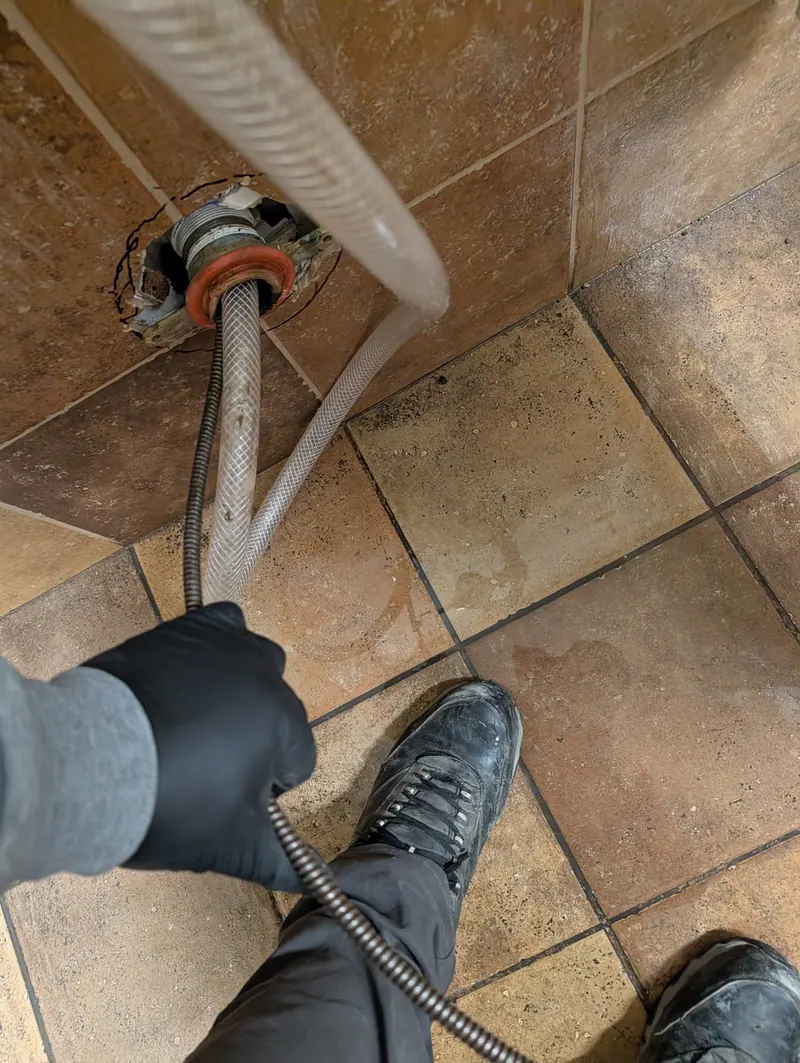
Because every drain in the house runs through the house trap, a clog there shows up everywhere.
Sewer smell from a house trap usually has one of three causes. First, a loose, cracked or missing cleanout cap lets sewer gas escape into the basement. Second, the trap seal can dry out or be siphoned if the house sits empty or the vent is not working. Third, a partial clog lets waste sit in the trap and in the line upstream.
If you smell sewer gas in a rowhome basement, check the cleanout caps on the house trap first. A tight, sound cap often fixes it. If the smell continues, the floor drain trap may be dry, which a bucket of water can solve. Persistent odor needs a professional look.
We do not recommend it. The house trap holds back everything in the main line. When you remove a cleanout cap on a clogged trap, wastewater can rush out into the basement. Old caps are often seized and crack when forced, and running a cable the wrong way through the trap can make a clog worse.
A drain technician knows which side of the trap to open, which direction the clog is likely in and how to control the water. If the clog is past the trap in the lateral, a cable or hydro jetter can go out to the street from the trap cleanout, and a camera can show what caused it.
If your basement is finished and the house trap is covered, consider adding an access panel. Being able to reach the trap quickly saves time and money on every future clog and makes inspection simple.
Call when water comes up through the basement floor drain, when several fixtures back up at once, or when you see sewage around the trap. Do not keep running water while you wait. If the house trap clogs often, ask for a camera inspection of the lateral, since roots in clay pipe and scale in cast iron are common in Philadelphia.
Fullerton Plumbing clears house traps and main lines across Philadelphia 24/7, gives an upfront quote before work starts and cleans up after. Call (518) 776-7838.
Need help now? Call (518) 776-7838, we answer 24/7. Request online and our team usually calls back within two hours. Learn more about our basement floor drain cleaning service.
In most older Philadelphia rowhomes the house trap is in the basement near the front wall, where the main drain leaves for the street. It is often set into the floor with one or two round cleanout caps on top. In finished basements it may be under a panel or behind a wall. Some newer homes do not have one.
When a basement floor drain backs up during laundry, the main drain is usually blocked at or past the house trap. The washer pumps out a lot of water fast, and with nowhere to go, it comes up through the lowest opening, the floor drain. Stop using water and call for main line or house trap cleaning.
Some homeowners choose to remove or replace a house trap during sewer work, but it depends on the condition of the plumbing, venting and local code at the time. It is not a do it yourself project. If your trap clogs often, ask a plumber to camera the line and explain whether repair, cleaning or replacement makes sense.
In many older Philadelphia rowhomes, a short pipe or grate near the front step or sidewalk is the fresh air vent for the house trap. It lets air into the drain system. If its cap is broken or missing, you may notice sewer smell outside the front of the house, especially when the drain is partly blocked.
Clear a clogged main sewer line fast, from the house trap to the city main, with cable machines, jetting and camera proof.
Main Sewer Line Cleaning detailsDrain snaking and rooter service that cuts through clogs in sinks, tubs, toilets, house traps and main sewer lines across Philadelphia.
Drain Snaking and Rooter Service detailsWe answer 24 hours a day, 7 days a week. Call and talk to a real person, or request service online and we will call you back.
Tell us what is happening. Our team usually calls back within two hours. Emergency? Call now, we answer 24/7.
Or call (518) 776-7838, 24 hours a day