Restaurant Drain Service
Restaurant drain cleaning for kitchen grease lines, floor drains, trench drains and restrooms, with 24/7 response across Philadelphia restaurant corridors.
Restaurant Drain Service details
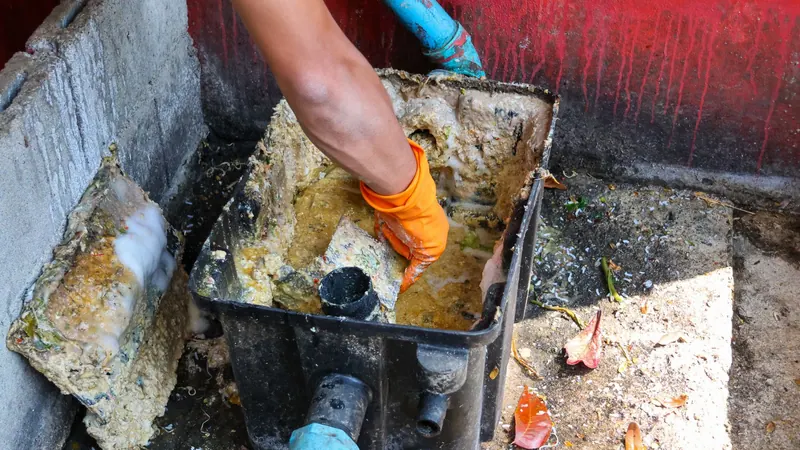
A working grease trap keeps your kitchen drains open and your business out of trouble. Here is how often to pump it, the signs it is full and FOG basics for Philadelphia kitchens.
Quick answer: Most Philadelphia restaurants need their grease trap pumped every one to three months, and high volume kitchens may need it more often. A common guideline is to clean before grease and solids fill about a quarter of the trap. Signs it is overdue include slow kitchen drains, bad odors and floor drain backups. Keep service records, and check the Philadelphia Water Department's current FOG guidance for your business.
A grease trap or grease interceptor sits between your kitchen fixtures and the sewer line. As wastewater flows through, it slows down and cools. Fats, oils and grease float to the top, food solids sink to the bottom, and the cleaner water in the middle flows out to the sewer.
Smaller grease traps are usually inside the kitchen, often under or near the sink, and are cleaned by hand. Larger grease interceptors are tanks, often in ground, that handle more flow and are pumped. Both stop working well once they fill up.
Philadelphia kitchens range from small takeout spots with an under sink trap to large restaurants and institutions with outdoor interceptors. Many operate in older buildings where the kitchen drains run through old cast iron and clay laterals, so grease that escapes the trap can cause trouble quickly.
There is no single schedule that fits every kitchen. A coffee shop that rinses milk pitchers produces far less grease than a cheesesteak grill or a fryer heavy kitchen. A common guideline is to clean the trap before the combined grease and solids layers reach about 25 percent of its depth. For many restaurants that works out to every one to three months. Very busy kitchens or small traps may need monthly or even more frequent service.
The best way to set your interval is to measure. Have the trap checked on each visit and adjust the schedule based on how full it is.
Seasonal changes affect the schedule too. Holiday rushes, outdoor dining seasons and menu changes can all increase the grease load. If your volume jumps, check the trap sooner rather than waiting for the usual date.

Watch for these warning signs between scheduled pumpings.
If you notice more than one of these signs, do not wait for the next scheduled visit. An overdue trap can turn into a floor drain backup during a busy service, which is far more costly than an early cleaning.
FOG stands for fats, oils and grease. When FOG goes down the drain, it cools and hardens inside pipes, both in your building and in the public sewer, where it contributes to blockages and overflows. The Philadelphia Water Department has rules for food service businesses on fats, oils and grease, which generally cover having proper grease control equipment, maintaining it and keeping records of service.
Requirements and inspection practices can change, so check PWD's current guidance for what applies to your business. A sound habit for any kitchen is to keep a log of every grease trap cleaning with the date, who did it and what was found.
Records also help when something goes wrong. If the sewer line backs up, a log showing regular grease trap cleaning helps a plumber rule out the trap and focus on the line itself, which saves time during an emergency.
Good daily habits stretch the time between pumpings and protect your lines.
Post a simple sign above the dish sink listing what can and cannot go down the drain. Clear reminders help busy staff make the right choice during a rush.
Fullerton Plumbing provides grease trap cleaning, grease trap pumping and grease interceptor service for restaurants across Philadelphia and the suburbs. We measure the trap, clean it fully, check the baffles and lines, hydro jet slow kitchen lines when needed and leave a written service record. We schedule around your hours and give an upfront quote before work starts. Call (518) 776-7838 24/7.
Need help now? Call (518) 776-7838, we answer 24/7. Request online and our team usually calls back within two hours. Learn more about our grease trap cleaning service.
Grease trap sizing depends on your fixtures, flow rate and the type of cooking, and it is set by plumbing code and local requirements. If you are opening a new restaurant or changing your menu or kitchen equipment, talk with your plumber and check the Philadelphia Water Department's current guidance before buying or installing a unit.
Some small under sink grease traps can be cleaned by trained staff, but it is messy and the waste must be disposed of properly, never poured into another drain. Many restaurants prefer a service provider for consistent cleaning and records. Larger grease interceptors need pumping equipment and should be serviced by professionals.
No. Some products claim to break down grease, but they often just break it into smaller pieces that pass downstream and harden again in the sewer line. They do not remove settled solids. Regular grease trap pumping and cleaning is still needed, and some local rules restrict certain additives. Check before using them.
A useful grease trap service record includes the date, the company or person who did the work, the size and type of unit, how full it was, what was removed and any problems found, such as damaged baffles. Keep records together and easy to reach. They help set your schedule and show your maintenance history.
Restaurant drain cleaning for kitchen grease lines, floor drains, trench drains and restrooms, with 24/7 response across Philadelphia restaurant corridors.
Restaurant Drain Service detailsCommercial drain cleaning, sewer cleaning and hydro jetting for Philadelphia businesses, offices, schools and buildings, 24/7 with camera proof.
Commercial Drain Cleaning detailsWe answer 24 hours a day, 7 days a week. Call and talk to a real person, or request service online and we will call you back.
Tell us what is happening. Our team usually calls back within two hours. Emergency? Call now, we answer 24/7.
Or call (518) 776-7838, 24 hours a day