Hydro Jetting
High pressure water jetting that scours grease, roots and scale from sewer and drain lines, leaving the pipe walls clean.
Hydro Jetting details

When every drain in the house backs up at once, the main sewer line is clogged. We clear it from the house trap to the city main and show you the pipe on camera.
Quick answer: If more than one fixture backs up at the same time, the main sewer line is almost always the problem. A toilet flush that raises water in the tub, a washer that floods the basement floor drain, or gurgling across several drains all point to the main line. A single slow sink usually means a branch line clog. When the lowest drain in the house overflows first, call for main line drain cleaning.
Main sewer line cleaning clears the single pipe that carries every drop of wastewater out of your home. In most Philadelphia homes that line runs from the cast iron stack in the basement, through the house trap near the front wall, and out under the sidewalk as a lateral to the city main under the street. When that pipe clogs, nothing in the house can drain. Toilets back up into tubs, the washing machine pushes water out of the basement floor drain, and the smell of sewage fills the basement.
A clogged sewer line is not a problem a plunger or store bought cleaner can fix. The blockage is usually 10 to 80 feet away and made of roots, grease, wipes, scale or a combination of all four. Fullerton Plumbing and Drain Cleaning carries heavy sectional cable machines with root cutting blades, hydro jetters for grease and sludge, and sewer cameras on every drain truck. We open the line first so your house works again, then we find out why it clogged so it does not happen again next month.
We handle main line drain cleaning for rowhomes, twins, singles, apartment buildings and commercial properties across Philadelphia and Bucks, Montgomery, Delaware and Chester counties. Fullerton is open 24 hours a day, 7 days a week, including nights, weekends and holidays, because a main sewer line clog rarely waits for a convenient time. You get an upfront quote before any work starts, a live camera view of your pipe when we inspect it, and a clean basement when we leave.
The U shaped house trap near the front basement wall is the first choke point in many Philadelphia rowhomes. Wipes, paper towels, grease and debris settle in the bend and build into a solid plug. We clear the trap through its cleanout, check the caps and fresh air vent, and then push past it to confirm the lateral is clear.
Terra cotta clay laterals have joints every few feet, and street tree roots grow through them looking for water. Fine roots catch paper and waste until the line stops. We cut roots out with a sectional cable machine and root saw head, then camera the line to show you where they are entering.
Kitchen grease cools and sticks to the walls of the main line, narrowing it over years. Soap scum and food waste add to the layer. A cable machine punches a hole through, but grease coats the pipe again quickly. Heavy buildup is best scoured out with hydro jetting after the line is opened.
Old cast iron corrodes from the inside and forms rough scale that snags waste. Clay pipe cracks, offsets at joints or collapses under heavy soil and traffic. Cleaning can restore flow, but a camera inspection is the only way to know whether the pipe needs descaling, a spot repair or replacement.
We locate the best way into your main line. In older Philadelphia rowhomes that is usually the house trap cleanout near the front basement wall. In newer homes it may be an exterior cleanout or a basement cleanout on the stack. The right access point makes the cleaning faster and safer for your pipes.
We run a sectional cable machine with the right cutting head for what is in the line, whether that is roots, wipes, grease or scale. We clear the house trap, then push through the lateral to the city main. Once water flows again, your fixtures can drain and the backup stops.
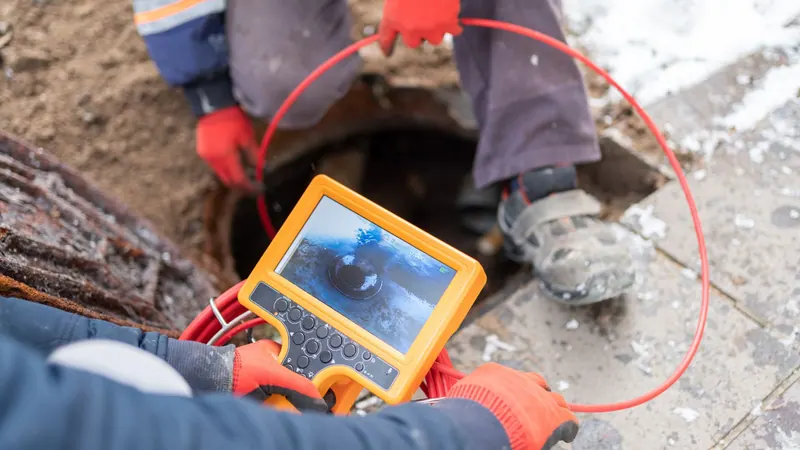
After the line is open we run a sewer camera from the cleanout out toward the street. You watch the live view with us. We look for roots at clay joints, cracked or offset pipe, sags that hold water, scale buildup in cast iron and anything else that caused the clog.
We explain what we saw in plain language and give you options. Some lines only need a cleaning. Some need hydro jetting to fully scour the pipe. Some need a spot repair or replacement. You get an upfront quote for any next step and no pressure to decide on the spot.
Philadelphia is a city of brick rowhomes built from the late 1800s through the 1950s, and most of them still drain through the original pipes. Inside, the stack is cast iron. Outside, the lateral under the sidewalk is often terra cotta clay or cast iron. Clay pipe comes in short sections with joints every few feet, and those joints loosen over decades. Street tree roots from London planes, maples and oaks find the moisture and grow right in. Many older homes also have a U shaped house trap on the main drain near the front basement wall. That trap is a natural catch point for wipes, grease and paper, and it is the first place we check when a South Philly, Fishtown or West Philly basement starts backing up.
In Philadelphia, the property owner is generally responsible for the sewer lateral from the house all the way out to the city main under the street. The Philadelphia Water Department maintains the main itself, not your house connection. That means a clogged lateral under the sidewalk is your line to clear. Northeast Philadelphia rowhomes and twins from the 1950s and 1960s have their own patterns, including cast iron that has scaled inside and Orangeburg pipe in some mid century homes. In the suburbs, mature trees on the Main Line and in Delaware County towns cause many of the same root clogs.
The cost of main sewer line cleaning depends on what is clogging the line, how far out the blockage sits and how easy it is to reach. A clear house trap cleanout in the basement is faster than pulling a toilet or working through a roof vent. Heavy root masses take more time and different cutting heads than a simple wipes clog. Night, weekend and holiday calls, adding a camera inspection, or following up with hydro jetting all change the scope. We look at your setup and give you an upfront quote before any work starts.
Call (518) 776-7838 for an upfront quote. We answer 24/7 and explain the price before any work starts.
No stock photos here. These are our own technicians, our own equipment and real repairs.


We provide main sewer line cleaning across Philadelphia and Bucks, Montgomery, Delaware and Chester counties.
If more than one fixture backs up at the same time, the main sewer line is almost always the problem. A toilet flush that raises water in the tub, a washer that floods the basement floor drain, or gurgling across several drains all point to the main line. A single slow sink usually means a branch line clog. When the lowest drain in the house overflows first, call for main line drain cleaning.
In Philadelphia the property owner is generally responsible for the sewer lateral from the house to the city main under the street, including the section under the sidewalk. The Philadelphia Water Department maintains the main itself. If your clog is in the lateral, clearing it is on the homeowner. We can camera the line to show you exactly where the blockage sits and whether it is in your lateral or at the connection to the main.
A house trap is a U shaped fitting on the main drain, usually near the front basement wall of older Philadelphia rowhomes. It holds water to block sewer gas from the city main. Because of its shape, it catches wipes, grease, paper and debris, which makes it one of the most common clog points in the city. We clear the trap, check its cleanout caps, and look past it for clogs further down the lateral.
No. Chemical drain cleaners will not clear a main sewer line clog. The blockage is usually tree roots, grease or wipes many feet away, and the chemical sits in the pipe without reaching it. Harsh chemicals can also damage old cast iron and the rubber seals in fittings, and they create a hazard for anyone who opens the line later. A sewer cable machine or hydro jetter is the right tool for a main line.
Most main sewer line cleanings take one to two hours once we are on site, depending on access and what is in the pipe. A wipes clog in the house trap can clear quickly. A lateral packed with roots out to the street takes longer. Adding a camera inspection usually adds a short amount of time. We tell you what we expect up front and keep you updated if the line needs more work.
A sewer line that clogs every few months almost always has an underlying problem. The most common causes in the Philadelphia area are tree roots growing back through clay pipe joints, a sag or belly in the lateral that holds waste, heavy scale in old cast iron, or a broken section of pipe. A camera inspection after cleaning shows the cause. From there, jetting, a root maintenance schedule or a repair can end the cycle.
Yes. Fullerton cleans main sewer lines for apartment buildings, mixed use rowhome properties with a storefront downstairs, restaurants, offices and other commercial properties across Philadelphia and the suburbs. Larger buildings often have bigger pipe and multiple stacks, so we bring heavier cable machines and hydro jetters. We can work around business hours and set up a regular maintenance schedule for buildings with recurring main line clogs.
High pressure water jetting that scours grease, roots and scale from sewer and drain lines, leaving the pipe walls clean.
Hydro Jetting detailsA live video sewer line inspection that shows roots, cracks, sags and clogs, so you know exactly what is in your pipe.
Sewer Camera Inspection detailsCut and flush tree roots out of clay and cast iron sewer lines, then camera the pipe to find where roots are entering.
Tree Root Removal detailsWe answer 24 hours a day, 7 days a week. Call and talk to a real person, or request service online and we will call you back.
Tell us what is happening. Our team usually calls back within two hours. Emergency? Call now, we answer 24/7.
Or call (518) 776-7838, 24 hours a day